
Music Contract Attorney in Chicago, Illinois
A recording contract, a publishing deal, or a 360 agreement is a multi-year business arrangement. The advance is the part that gets attention. The royalty structure, the recoupment terms, the copyright transfer, and the option periods are the parts that determine what you actually earn and own — for years after the initial excitement of the deal fades. I've negotiated at the major label level with Sony. I know what those contracts contain, what labels expect to hold, and what experienced representation can change.
Major Label Contract Experience
Polo G / Sony Recording Deal
Recording, Publishing, and 360 Agreements
Paralegal Support for Entertainment Matters
Music Contracts I Review and Negotiate
Recording Agreements
A recording agreement — whether with a major label like Sony, Universal, or Warner, or an independent — governs the recordings you make, the royalties you earn, the advance you receive and must recoup, and the rights the label holds over your music. Major label contracts involve complex multi-year structures with option periods that give the label the right to extend the agreement on terms that were set before your career trajectory was known. Every clause in a recording agreement requires review by someone who understands what the language actually commits you to.
Publishing Agreements and Co-Publishing Deals
A publishing agreement transfers some or all of your ownership in the compositions you write — not just the recordings, but the underlying songs themselves. A co-publishing deal splits that ownership between you and the publisher, typically in exchange for an advance and administrative support. The split, the term, and the reversion rights in a publishing agreement determine what you own of your catalog for the life of the copyright. These are not standard agreements with standard terms.
Producer Agreements
A publishing agreement transfers some or all of your ownership in the compositions you write — not just the recordings, but the underlying songs themselves. A co-publishing deal splits that ownership between you and the publisher, typically in exchange for an advance and administrative support. The split, the term, and the reversion rights in a publishing agreement determine what you own of your catalog for the life of the copyright. These are not standard agreements with standard terms.
360 Deals
A 360 deal — also called a multiple rights deal — gives the label participation in revenue streams beyond recorded music, including touring income, merchandising, endorsements, and publishing. Major labels have increasingly moved toward 360 structures, particularly with developing artists. The percentage the label takes from each revenue stream, and whether those streams are defined broadly or narrowly, is entirely a matter of negotiation. Signing a 360 deal without experienced legal review is one of the costliest mistakes a developing artist can make.
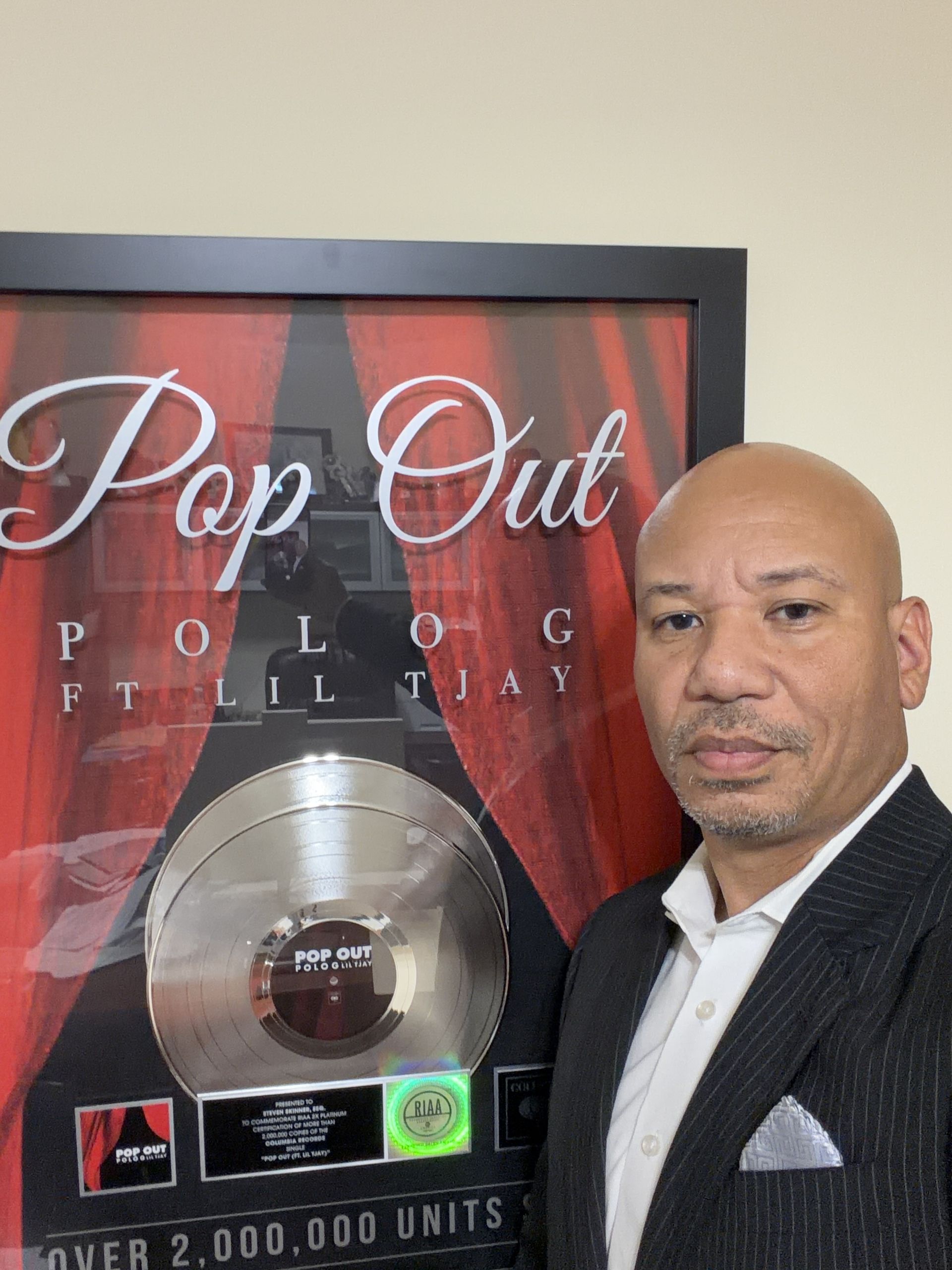
The Polo G / Sony Contract and What Major Label Negotiation Requires
When I negotiated Polo G's first recording contract with Sony, the deal exceeded one million dollars. Polo G — Chicago-native rapper Taurus Bartlett — has since certified multiple platinum recordings. A double platinum Grammy award from one of those recordings is in my office.
That transaction required understanding not just the legal language of the contract but the industry-specific context in which that language operates: how Sony structures advances for developing artists, which deal points they negotiate on and which they typically hold firm, and where a well-represented artist can meaningfully improve the terms of an initial offer.
Major labels draft contracts in their favor. That's expected — it's their standard form. An attorney who has negotiated at that level knows the document before it arrives, which means the review is faster, the negotiation is more targeted, and the result is better for the artist.
If you have a label offer in front of you, from a major or an independent, the right time to involve an attorney is before you respond to it — not after you've already signaled what you'll accept.
The Deal Points That Determine What You Actually Keep
Most artists focus on the advance. The advance is one number. The contract is everything else.
I've reviewed and negotiated these deal points at the major label level. I know which of them labels treat as fixed and which move in negotiation. That distinction is the practical value of experienced music contract representation.
The deal points that matter most in a recording contract include:
Royalty rates and format variations:
Base royalty rates differ by format, territory, and licensing type; streaming, physical, download, sync, and foreign rates are often set independently and are all negotiable
Advance structure and recoupment:
Advances are loans against future royalties; the rate at which the label recoups the advance from your earnings determines how long it takes before you see royalty income — if you ever do
Copyright ownership and master rights:
Major label recording agreements typically transfer ownership of your master recordings to the label; reversion clauses, if negotiable, define whether and when those rights can return to you
Term length and option periods:
The initial contract term covers a defined number of albums or a defined period, with label options to extend; those options are exercisable at the label's discretion, not yours
Creative control provisions:
Approval rights over recording choices, featured artists, visual assets, and release timing vary significantly by contract and by the leverage the artist brings to the negotiation
Name and likeness rights:
Labels routinely secure broad rights to use your name, image, and biographical information for marketing purposes; the scope of those rights is negotiable
360 provisions:
If the agreement includes participation in non-recording revenue, the definition of each revenue category and the percentage the label receives from each is a primary negotiating point
Geography Doesn't Determine Legal Competence in Music Contracts
Music contracts are reviewed and negotiated based on the document and the deal — not on where the attorney's office is located. The Polo G / Sony deal was negotiated from Chicago. Major labels engage with attorneys based on what they know and how they negotiate, not on whether they're in Los Angeles or New York.
Paralegal support assists on entertainment matters. Every contract review and negotiation is handled directly by me.
If you're an artist or manager with a contract that needs review, I work with clients regardless of where the deal originates or where the label is headquartered.
Testimonials
I can’t thank Steve enough for the work he did on my criminal case. From day one, he was extremely professional, knowledgeable, and straightforward about everything. He responded quickly whenever I had questions and always kept me informed about what was going on. Most importantly, he got my case dismissed.
David Cortez
5 stars across the board! Mr. Skinner was a great help, very professional and knowledgeable. He did what he said he would! I would highly recommend him for all of your legal needs!
Jim Marino
Attorney Skinner handled my daughter’s traffic matter wonderfully! He was very professional and helpful throughout the process.
Keri Moritz
Quick and concise service. Applying for law enforcement, needed to clean up my past ASAP, Mr Skinner ensured the job got done in time for the next hiring cycle. A blessing no doubt!! Knowledgeable and professional, well mannered, I recommended highly.
Steven Quiroz

Do I need an attorney for a recording contract?
Yes. A recording contract is a legally binding, multi-year agreement that transfers rights, sets royalty rates, and governs your creative output for a defined term with label options to extend. The initial draft is written by the label's legal team, in the label's interest. An experienced music contract attorney reviews every clause, explains what you're committing to, and negotiates on your behalf before you sign. Once the contract is signed, the terms are fixed.
What should I look for in a music contract attorney in Chicago?
Look for an attorney with direct experience reviewing and negotiating music contracts — particularly at the level of deal you're considering. A general practice attorney can review a contract for legal compliance; an entertainment attorney with major label experience understands the industry-specific deal points that define a recording agreement's actual value to the artist. Ask specifically about their experience with recording agreements, publishing deals, and the deal points that affect royalties, ownership, and creative control.
What is recoupment in a recording contract and why does it matter?
Recoupment is the process by which a label recovers its advance from your future royalty earnings before you receive any royalty income. The advance you receive is not free money — it's an advance against your royalties, repaid to the label at the royalty rate specified in your contract, which is typically a fraction of what the label earns per stream or sale. The recoupment structure determines how long you work before seeing royalty income. It's one of the most important terms in any recording agreement and one of the most frequently misunderstood.
What is a 360 deal and should I sign one?
A 360 deal gives the label participation in revenue streams beyond recorded music, including touring, merchandising, endorsements, and sometimes publishing. Labels use 360 structures to offset the risk of signing developing artists. Whether signing one makes sense depends entirely on the specific terms — the percentage the label takes from each revenue stream, how those streams are defined, and what the label is offering in return. A 360 deal reviewed by an experienced music contract attorney is a different instrument than one signed without representation.
Can a Chicago music contract attorney handle deals with major labels like Sony, Universal, or Warner?
Yes. I negotiated Polo G's first recording contract with Sony from Chicago. Music contract negotiations are conducted based on the document and the deal, not on geographic proximity to the label. Major labels engage with attorneys based on their knowledge of the industry and the contract — I've been in that room, and I work with artists and managers on label deals regardless of where the label or the artist is located.
Steven Skinner is a music contract attorney in Chicago, Illinois and the negotiating attorney behind Polo G's first recording contract with Sony. He reviews and negotiates recording agreements, publishing deals, producer agreements, and 360 deals for artists and managers working at the independent and major label level. Paralegal support assists on entertainment matters; every contract review and negotiation is handled directly by Steven. His office is located at 7548 West 103rd St, Bridgeview, IL 60455. Learn more about his entertainment law practice on the Entertainment Law page.
Ready to Talk Through Your Situation?
Reading is a good first step. A free conversation with an attorney is the next one. Call or text anytime — for criminal defense matters, I'm available around the clock.